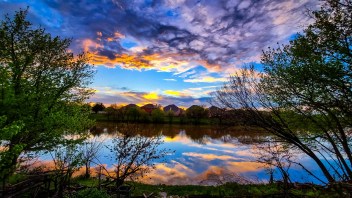
“Spring is nature’s way of saying, ‘Let’s party!’” – Robin Williams

On Monday, the Northern Hemisphere experienced the spring equinox, but what exactly does this mean? As the Earth orbits around the sun, it does so at an angle, resulting in unequal distribution of sunlight and warmth between the northern and southern hemispheres throughout most of the year. However, during the equinox, the Earth’s axis and orbit align in a way that both hemispheres receive an equal amount of sunlight. The term “equinox” comes from Latin words meaning “equal” and “night,” as day and night last nearly the same amount of time during this period, with slight variations depending on location. The spring equinox, also known as the vernal equinox, typically falls on March 19, 20, or 21, and this year it occurred on Monday at 5:24 p.m. Eastern time.
There are two ways of dividing the year: meteorological and astronomical seasons. Meteorological seasons, based on annual temperature cycles, divide the year into three-month seasons. Spring already started on March 1 and will continue until May 31. On the other hand, astronomical seasons are determined by how the Earth moves around the sun. Equinoxes mark the beginning of spring and autumn, as the sun shines equally on both hemispheres. Solstices mark the start of summer and winter, as the Earth experiences its strongest tilt towards or away from the sun.

Now that spring has arrived in the Northern Hemisphere, people can expect longer daylight hours, with earlier sunrises and later sunsets, until the summer solstice in June. The new season brings warmer weather, the blooming of plants, and the migration of animals. Meanwhile, in the Southern Hemisphere, the opposite will occur, with days becoming shorter as this part of the planet transitions from summer to autumn.
According to the US government’s national outlook for the season, the spring of 2023 is expected to bring wet weather, which will help alleviate drought conditions in the western regions of the country. Melting snowpack may also pose a flood risk in the Midwest. While much of the southern and eastern US may experience warmer-than-average temperatures this spring, parts of the Great Basin and northern Plains will likely be cooler than usual.
Leave a Reply